

1. MOTOROLA RADIOS R2 Portable Two-Way Radio
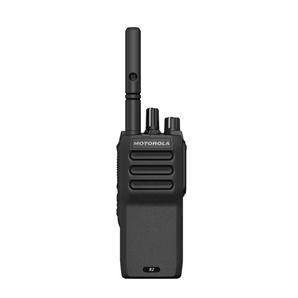
- The Baseline Operational Philosophy: Positioned as the foundational, next-generation entry-tier digital transceiver, the Motorola Radios MOTOTRBO R2 is the direct physical and technological evolution of the legacy CP200d, BPR40, and DP1400 platforms. It is intentionally designed to serve as a low-complexity, high-durability tool for everyday workflows in sectors like retail management, educational campus security, logistics warehousing, and light manufacturing plants.
- Acoustic Processing & Advanced Audio Engineering: The R2 integrates Motorola Radios proprietary SINC+ (Single-Microphone Industrial Noise Cancellation) software algorithms. This feature uses digital signal processing (DSP) to isolate human voice frequencies from chaotic background noise. It tracks environmental audio up to 101 phons, allowing users to communicate clearly near forklifts, conveyor belts, and screaming crowds. Additionally, it features an automated acoustic feedback suppressor that dynamically compresses audio loops when two or more radios are keyed in close physical proximity to one another.
- Physical Architecture, Structural Ruggedness, and Ergonomics: Weighing only 261 grams when equipped with a slimline lithium-ion battery pack, the R2 is built for low-fatigue, full-shift portability. Motorola Radios external casing is composed of impact-resistant polycarbonate compounds certified under MIL-STD 810H across 11 distinct environmental abuse categories (including mechanical shock, vibration, and extreme temperature thermal shocks). It carries an IP55 environmental protection rating, validating complete protection against internal dust accumulation and directional low-pressure water splashes from any angle.
- RF Performance, Memory, Logic, and Power Architecture: The R2 operates on standard conventional digital or analogue channels across either VHF (136–174 MHz) or UHF (403–480 MHz) configurations, pumping out a maximum RF transmitter power of 5 Watts and 4 Watts respectively. It features a physical architecture supporting 64 channels distributed across multiple zones, manageable via two customizable side-mounted shortcut keys. When paired with the high-capacity IP55 Li-Ion smart battery, the radio runs an ultra-low power consumption cycle that yields up to 26.5 continuous hours of digital operation on a standard 5-5-90 duty cycle (5% transmitting, 5% receiving, 90% standby).
2. MOTOROLA RADIOS R5 Portable Two-Way Radio

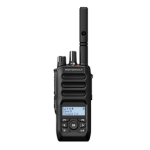
- The Baseline Operational Philosophy: The Motorola Radios MOTOTRBO R5 occupies a precise mid-tier enterprise niche within the fleet architecture. It is built for organizations that do not require a full, complex alphanumeric color screen interface but demand uncompromising hardware environmental survivability, advanced digital trunking compatibility, and enhanced hardware audio processing. It serves as the primary tool for heavy manufacturing zones, chemical blending lines, and large-scale facility maintenance fleets.
- Acoustic Processing & Advanced Audio Engineering: The R5 upgrades its audio footprint by integrating a high-output internal wideband speaker assembly capable of outputting clear, intelligible voice calls at a deafening 106 phons. The Motorola Radios run an artificial-intelligence-trained background filtering protocol that systematically strips out continuous heavy mechanical droning, air compression hiss, and heavy assembly line vibrations, ensuring dispatchers receive clean voice traffic even during peak industrial operations.
- Physical Architecture, Structural Ruggedness, and Ergonomics: Structurally upgraded to meet a completely dust-tight and water-submersible IP67 platform certification, the R5 can survive complete immersion in fresh water up to a depth of 1 meter for up to 30 continuous minutes without any liquid breaching the internal circuit boards. For explosive environments, Motorola Radios feature an intrinsically safe UL TIA-4950 deployment variant, meaning its internal electrical circuits are designed to never produce an electrostatic spark or thermal threshold capable of igniting airborne combustible dust, flammable gases, or chemical vapors.
- RF Performance, Memory, Logic, and Power Architecture: The R5 breaks away from standard entry-tier limitations by integrating a 1.5-inch high-contrast, low-draw monochrome display (132×48 pixels) embedded directly into the top portion of the chassis. This screen provides instant visual confirmation of active channel zones, battery percentage flags, and RSSI signal strength bars. It includes built-in dual-band Wi-Fi (2.4 GHz and 5 GHz) and Bluetooth 5.2 modules for wireless programming and audio accessory pairing. It features an advanced energy-saving architecture that stretches operational performance up to 32 operational hours per charge cycle when utilizing high-capacity IMPRES smart energy cells.
3. MOTOROLA RADIOS R7 Portable Two-Way Radio
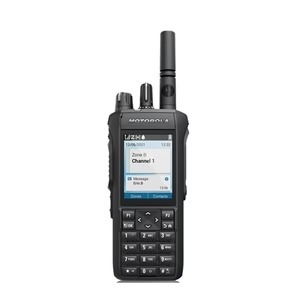
- The Baseline Operational Philosophy: As the premium, uncompromised flagship model of the current Motorola Radios MOTOTRBO digital portfolio, the R7 is engineered for heavy enterprise operations, large-scale commercial transportation hubs, airport tarmac management, and sprawling multi-site maritime ports. It acts as an edge device that bridges traditional critical push-to-talk voice with modern enterprise software applications.
- Acoustic Processing & Advanced Audio Engineering: The audio capabilities of the Motorola Radios R7 are the highest in its class, reaching up to 107 phons in its dedicated extra-loud operating mode—making it louder than a passing lawnmower at close range. It uses Adaptive Dual-Microphone Noise Suppression. The secondary rear microphone constantly samples ambient environmental sounds, while the primary front microphone captures the user’s voice. The onboard processor subtracts the rear profile from the front profile in real-time, completely isolating human speech in high-noise environments.
- Physical Architecture, Structural Ruggedness, and Ergonomics: The R7 features an ultra-rugged housing designed to withstand harsh commercial cleaning agents, medical-grade disinfectants, and chemical washdowns without cracking or deteriorating. Motorola Radios R7 has a dual environmental rating of IP68 (submersion under 2 meters of water for 2 continuous hours) and IP66 (protection against high-pressure water jets, such as a localized fire hose breach).
- RF Performance, Memory, Logic, and Power Architecture: Available in either a sleek non-keypad design or a comprehensive full-keypad layout paired with a vibrant 2.4-inch QVGA color display. The software architecture natively supports advanced DMR Tier III trunking logic (Capacity Max), allowing the device to seamlessly roam across massive networks containing up to 250 distinct sites. It comes with embedded WPA3 secure Wi-Fi protocols for secure over-the-air firmware deployment, integrated GNSS satellite tracking (GPS, GLONASS, and Galileo), and Bluetooth 5.2 data routing. Powered by specialized IMPRES smart health modules, it tracks battery degradation and achieves up to 28 hours of continuous operation.
🛡️ Mission-Critical Trunked Platforms (TETRA Portfolio)
1. MOTOROLA RADIOS MTP3550 TETRA Portable Radio
- The Baseline Operational Philosophy: The MTP3550 is a specialized, mission-critical terminal designed exclusively to interface with open-standard TETRA (Terrestrial Trunked Radio) infrastructure networks. This platform is typically used by national security agencies, military support detachments, heavy railway networks, and blue-light municipal emergency responders who require secure, non-blocking network access during major regional incidents.
- Acoustic Processing & Advanced Audio Engineering: Designed to maintain voice intelligibility over roaring sirens, jet engines, and industrial exhaust lines, the Motorola Radios MTP3550 utilizes a high-performance 2 Watt RMS (4 Watt peak) internal audio driver. This hardware is paired with specialized, heavy-duty external remote speaker microphones (RSMs) that dynamically level incoming voice traffic, ensuring sudden loud transmissions do not distort or clip.
- Physical Architecture, Structural Ruggedness, and Ergonomics: Built to survive extreme conditions, the Motorola Radios MTP3550 carries comprehensive IP65, IP66, and IP67 certifications. This multi-tier rating proves the handset can survive high-velocity dust storms, high-pressure water washdowns, and total submersion under 1 meter of corrosive saltwater for 30 minutes. The external physical accessory connector pads are engineered with a specialized gold-plated, scratch-resistant alloy to prevent corrosion from sweat, rain, or chemical exposure.
- RF Performance, Memory, Logic, and Power Architecture: The Motorola Radios MTP3550 operates strictly within specialized mission-critical frequency bands, typically ranging across 350–470 MHz. It features a highly durable, transflective 262,000-color display that uses natural sunlight to illuminate its pixels, making it fully visible under direct midday sun. The device includes secure End-to-End Encryption (E2EE) hardware modules to prevent unauthorized eavesdropping on sensitive communications. It features an automated “Man Down” sensor that monitors the three-axis orientation and movement of the radio, instantly triggering a priority emergency distress beacon with live GPS/GLONASS positioning coordinates if an operative falls or remains motionless. It also contains an integrated internal RFID tag for automated warehouse inventory asset auditing.
🛞 Motorola Radio Mobile In-Vehicle Stations (DM Ranges)
The mobile radio lineup is split by geographic region: the XPR designation is utilized across North American commercial markets, while the matching DM designation is deployed across Europe, the Middle East, Africa (EMEA), and Asia-Pacific.
1. Entry-Tier Mobiles: DM1400 / DM1600
- The Baseline Operational Philosophy: Designed as straightforward, distraction-free in-vehicle transceivers, these models are engineered for installation inside the dashboards of delivery vans, long-haul freight trucks, civil construction vehicles, and heavy agricultural machinery. They provide basic, dependable push-to-talk communications without complex menu layers that could distract a driver on the road.
- Display Logic, UI Interface, and Software Configurations: The entry-tier models are split by display type. The Motorola Radios DM1400 (Discontinued) utilize a basic, high-visibility 2-character numeric LED display that simply indicates the current operating channel number. The Motorola Radios DM1600 feature a multi-line, high-contrast alphanumeric graphics display that shows caller IDs, active talkgroup aliases, and menu settings. Both lines include Dual Capacity Direct Mode processing. This software feature uses the TDMA digital clock cycle to split a standard 12.5 kHz channel into two independent talkpaths, effectively doubling user capacity without requiring an expensive repeater frequency license.
- RF Power Output and Installation Parameters: These mobile units deliver powerful signal transmission, configurable from 25 Watts up to 45 Watts (UHF) or 50 Watts (VHF). This high output ensures clear voice penetration across wide rural service areas or deep into subterranean concrete parking structures.
2. Mid-Tier Mobiles: DM2600
- The Baseline Operational Philosophy: These models represent a versatile mid-tier choice for growing organizations that need to link multiple distinct facilities or construction sites across a region without investing in a massive, high-cost trunked network infrastructure.
- Systems Integration & Multi-Site Networking: The core technological advantage of the Motorola Radios DM2600 is full, native compatibility with IP Site Connect system architecture. This software feature allows the mobile radio to utilize local IP internet routers to bridge geographic boundaries, letting a mobile driver in one city converse with a dispatcher located hundreds of kilometers away.
- Fleet Maintenance, Over-the-Air Software Programming (OTAP): These units support advanced Over-the-Air Programming (OTAP) protocols. Fleet managers can push channel updates, privacy encryption key rotations, and functional firmware updates wirelessly across the radio spectrum, eliminating the need to pull vehicles into a maintenance facility for physical cable programming.
3. Premium-Tier Mobiles: DM4000e Series (e.g., DM4400e, DM4601e)
- The Baseline Operational Philosophy: Positioned as high-tier in-vehicle consoles, these units are designed for command vehicles, emergency dispatch vans, public transport supervisors, and central logistics managers who oversee large, high-density radio fleets.
- Advanced Data Capabilities, Display Systems, and Smart Telemetry: The premium series features highly sophisticated text messaging, work order ticketing software, and full-color alphanumeric displays (on the Motorola Radios DM4600e and DM4601e models). They include built-in Bluetooth modules that function as a data gateway, allowing laptops, barcode scanners, and mobile printers to route data directly back to central headquarters over the radio network.
- Satellite Positioning & Advanced Trunked Frameworks: These Motorola Radios feature integrated multi-satellite GNSS positioning arrays (combining GPS, GLONASS, and Galileo) to track vehicle speed, direction, and live location coordinates for automated fleet management. Out of the box, they fully support high-capacity digital trunking architectures, including Capacity Plus Single Site, Capacity Plus Multi-Site, and full control-channel-driven Capacity Max (DMR Tier III) setups.
🗼 Motorola Radios Core Network Infrastructure
1. MOTOTRBO SLR 5500 Repeater / Base Station

- The Baseline Operational Philosophy: The SLR 5500 is the central hub of any commercial or enterprise radio network. It is engineered to overcome line-of-sight signal blocking caused by natural terrain, urban concrete jungles, or massive steel-reinforced industrial plants, amplifying and re-transmitting signals across the entire operational footprint.
- Continuous Duty Cycle & Advanced Thermal Management: Unlike field portable or mobile units that transmit intermittently, the Motorola Radios SLR 5500 is engineered for a 100% continuous duty cycle at its maximum 50-Watt power output. It can handle non-stop transmission at full power 24 hours a day, 365 days a year. It achieves this reliability via an internal, high-efficiency automated fan array and a low-draw power supply unit designed to minimize heat generation.
- Form Factor and Rack-Mount Integration: Designed to integrate into standard IT server rooms, the Motorola Radios SLR 5500 features a slim 1U rack-mount chassis (just 44mm tall). This compact size saves valuable rack space and lowers facility leasing costs.
- System Compatibility & Multi-Generation Network Bridging: The SLR 5500 supports all major Motorola system architectures, including conventional single-site repeaters, IP Site Connect links, Capacity Plus trunking, and full Capacity Max infrastructure networks. Motorola Radios repeater can also operate in a dynamic mixed mode, automatically switching between analogue and digital modes depending on the incoming signal, allowing organizations to migrate to modern digital systems at their own pace.
RF connector types
Here are the standard RF (Radio Frequency) connector types used across the back panels and antenna ports of the mobile radios, repeaters, and portable devices discussed:
🗼 Core Infrastructure (SLR 5500 Repeater)
Because a Motorola Radios repeater handles simultaneous high-power transmitting and sensitive receiving, its back panel utilizes high-isolation, low-loss connectors:
- Tx (Transmit) Port: N-Type Female. The N-Type connector is a threaded, weatherized RF connector capable of handling higher power levels with exceptionally low signal leakage.
- Rx (Receive) Port: BNC Female. The BNC connector uses a quick-disconnect bayonet mount. It is ideal for the lower-power receive signals where high flexibility and rapid isolation testing are needed.
- Reference Audio/Sync Ports: BNC Female (used for internal timing alignment, external frequency references, or PPS GPS sync).
🛞 Mobile In-Vehicle Stations (CM, DM, & XPR Ranges)
Motorola mobile radios use specific, heavy-duty connectors designed to withstand continuous vehicle vibrations and thermal shifts:
- Antenna Port (Back Panel): Mini-UHF Female (also referred to as an M-UHF connection). To connect a standard mobile antenna coaxial cable (which often terminates in a larger PL-259/UHF male connector), you will need a Mini-UHF Male to UHF Female (SO-239) adaptor.
- GPS/GNSS Antenna Port (Optional/Select Models): SMA Female. On data-capable models like the Motorola Radios DM4601e, a secondary, smaller threaded SMA connection is located on the back panel specifically to attach an external active GPS/GLONASS puck antenna.
📱 Portable Handsets (R2, R5, R7, and MTP3550)
Portable walkie-talkies require proprietary or highly robust miniature connectors to prevent moisture ingress and thread stripping during everyday field use:
- Motorola Radios MOTOTRBO R2, R5, and R7 Antenna Connection: Motorola Radios Proprietary Threaded Stud (Female chassis socket). The antennas themselves feature a matching threaded male screw stud. These are intentionally designed so that the antenna acts as a seal against dust and water entry into the RF final stage.
- MTP3550 TETRA Antenna Connection: SMA Male (on the antenna) screwing into an SMA Female (on the radio chassis) or a specialized ruggedized variants of the TNC/SMA screw-thread interface, depending on the exact regional public safety sub-variant.
- RF Test/Programming Interface (Side Connector): Multi-pin Proprietary Accessory Connectors. While these are primarily for audio (microphones and earpieces) or data programming, they feature an internal grounded RF contact switch used by technicians to hook the radio directly to an RF service monitor via an alignment adaptor.
⚡ Coaxial Impedance & Power Tolerances
All current Motorola Solutions commercial and professional radio hardware operates strictly on a 50-Ohm nominal impedance standard. Matching this impedance across your entire RF chain (radio, connectors, cable, and antenna) prevents signal reflections that degrade coverage and cause potential hardware failure.
The power tolerances, voltage limits, and insertion loss properties for each RF connector type across the portfolio include:
1. N-Type Female (SLR 5500 Transmit Port)
- Impedance: 50 Ohms
- Frequency Range Rating: DC to 11 GHz
- Max Power Tolerance: ~300 Watts at 450 MHz (easily handles the SLR 5500’s maximum 50-Watt continuous output).
- Insertion Loss: < 0.15 dB at 500 MHz
- Mechanical Durability: Threaded coupling mechanism prevents accidental disconnection under heavy vibration.
2. BNC Female (SLR 5500 Receive & Sync Ports)
- Impedance: 50 Ohms
- Frequency Range Rating: DC to 4 GHz
- Max Power Tolerance: ~80 Watts at 450 MHz (primarily used for receive signals, which operate in fractions of a Watt).
- Insertion Loss: < 0.20 dB at 500 MHz
- Mechanical Durability: Quick-disconnect bayonet locking mechanism.
3. Mini-UHF Female (Motorola Radios DM Mobile Antenna Ports)
- Impedance: 50 Ohms (nominal, though slightly variable at higher frequencies).
- Frequency Range Rating: DC to 2.5 GHz
- Max Power Tolerance: ~100 Watts at 450 MHz (perfectly rated for the 45W/50W maximum output of the mobile fleet).
- Insertion Loss: < 0.25 dB at 500 MHz
- Mechanical Durability: Compact threaded coupling designed specifically for space-constrained vehicle dashboards.
4. SMA Female (GPS Ports & TETRA Portable Bases)
- Impedance: 50 Ohms
- Frequency Range Rating: DC to 18 GHz
- Max Power Tolerance: ~25 Watts at 450 MHz (used strictly for low-power GPS signals or portable handset outputs).
- Insertion Loss: < 0.10 dB at 500 MHz
- Mechanical Durability: Sub-miniature threaded coupling requires precise torque to prevent over-tightening.
📉 Voltage Standing Wave Ratio (VSWR) & Hardware Protection
To keep your equipment running safely, the entire RF system should ideally maintain a VSWR of 1.5:1 or lower.
- The Risk: High VSWR means transmitted power is reflected back into the radio instead of leaving the antenna. This reflected energy turns into extreme heat.
- Built-in Protection: The SLR 5500 repeater and premium mobiles like the Motorola Radios DM4000e series feature automated VSWR rollback protection. If the radio detects a damaged cable or a missing antenna (an open circuit), it instantly cuts its transmission power down to a fraction of a Watt to prevent destroying its own internal RF power amplifier.
🔌 Choosing Your Coaxial Cable
To prevent wasting the power your radio produces, match your cable run to the length of the distance between your radio and the antenna:
Frequently Asked Questions: Motorola Professional Radios
How do I connect the Motorola SLR 5500 repeater to a duplexer?
To connect a Motorola SLR 5500 repeater to a duplexer, you must route separate coaxial jumper cables from the individual transmitter and receiver ports on the rear panel of the chassis. Connect the N-Type Female Tx port to the “High” or “Low” band transmit cavity input of the duplexer using a high-shielded LMR-240 cable. Next, route a jumper from the BNC Female Rx port to the opposing receive cavity input on the duplexer. The single combined antenna port on the duplexer is then connected to your primary outdoor antenna coax feedline.
What is the difference between Motorola XPR and DM mobile radios?
The primary difference between Motorola XPR and DM mobile radios is geographic regional branding and regional frequency presets. The XPR designation (e.g., XPR 5550e) is marketed exclusively across North America. The DM designation (e.g., DM4600e) is deployed throughout Europe, the Middle East, Africa (EMEA), and the Asia-Pacific regions. Internally, the core digital MOTOTRBO functionality, firmware logic, and RF power levels remain essentially identical between matching tiers.
Why does my Motorola radios cut power when the antenna is damaged?
Modern Motorola Radios professional hardware, including the SLR 5500 repeater and DM4000e mobile series, features automated VSWR rollback protection. When the radio detects an antenna mismatch, a damaged coaxial cable, or a missing antenna, it recognizes a dangerously high Voltage Standing Wave Ratio (VSWR). To prevent the reflected RF energy from generating extreme heat and burning out the internal RF power amplifier chips, the radio instantly drops its transmitter output power to a fraction of a Watt.